Introduction
Flour is a staple ingredient in many kitchens, forming the base of everyday foods such as rotis, dosas, breads, and baked products. While flour may appear similar across brands, the method used to process the grain can make a significant difference in its nutritional value.
Two common processing methods are stone grinding and factory milling. Although both methods produce flour from grains like wheat and millets, the way the grain is handled during processing can influence how much of its natural nutrition is preserved.
Understanding the difference between these methods helps consumers make informed choices, especially when selecting organic wheat and millet flours.
What Is Stone Ground Flour?
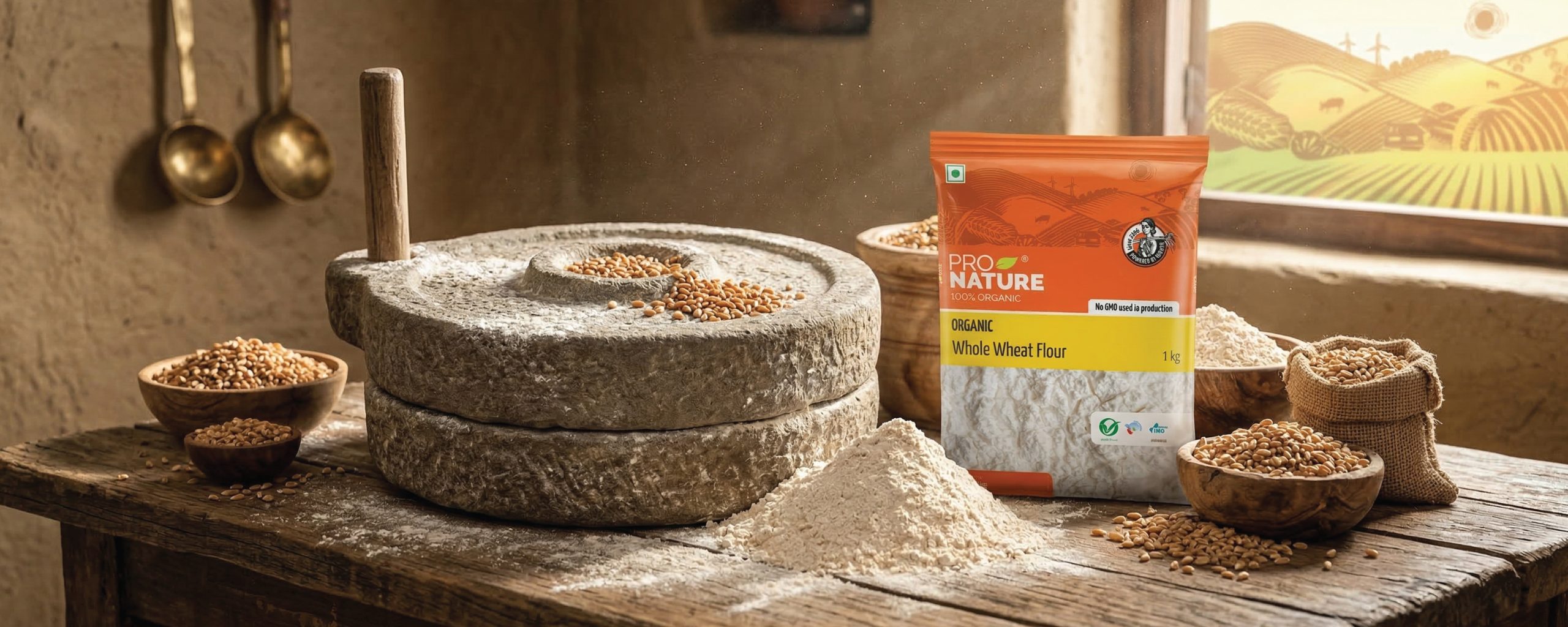
Stone grinding is one of the oldest methods of milling grains. In this traditional process, grains are crushed slowly between large natural stones to produce flour. The grinding happens at a relatively low speed, which prevents excessive heat generation.
Because the process is gentle and minimal, the entire grain is usually ground together, including the bran, germ, and endosperm. These three parts of the grain contain important nutrients such as fiber, vitamins, minerals, and healthy fats.
As a result, stone ground flour often retains more of the grain’s natural composition.
What Is Factory Milled Flour?
Factory milling uses modern industrial machines such as roller mills to process grains at high speed. This method is designed for large-scale production and longer shelf life.
During the milling process, the grain is typically separated into different components. The bran and germ are often removed, leaving mainly the endosperm. While this produces a finer and more uniform flour, it can also reduce the amount of natural nutrients present in the final product.
In some cases, nutrients are later added back through fortification, but the flour may still lack the full natural balance of the whole grain.
How Stone Grinding Helps Preserve Nutrition
One of the key advantages of stone grinding is the low heat generated during milling. Excessive heat during processing can damage certain sensitive nutrients, particularly vitamins and natural oils found in the germ of the grain.
Since stone grinding operates at a slower pace, it helps maintain the natural integrity of the grain. The result is flour that retains more of its original nutrients, flavor, and aroma.
This is particularly beneficial when processing nutrient-dense grains such as wheat and millets.
Whole Grain Benefits in Stone Ground Flour
Stone ground flours generally include the complete grain structure, which contributes to their nutritional value. Each part of the grain offers unique benefits:
- Bran provides dietary fiber that supports digestion.
- Germ contains vitamins, minerals, and natural oils.
- Endosperm supplies carbohydrates and some protein for energy.
When these components remain intact, the flour delivers a more balanced nutritional profile compared to highly refined flour.
Why This Matters for Wheat and Millet Flours
Both wheat and millets are naturally rich in nutrients. Millets in particular are valued for their fiber, minerals, and plant-based protein. When processed gently through stone grinding, much of this nutritional content can be retained.
In contrast, highly refined milling methods may remove portions of the grain where many nutrients are concentrated. This can result in flour that is softer in texture but lower in natural fiber and micronutrients.
For those looking to include wholesome grains in their diet, stone ground organic flours offer a closer representation of the grain in its natural form.
Flavor and Texture Differences
Beyond nutrition, the milling method can also affect the taste and texture of flour.
Stone ground flour tends to have:
- A slightly coarser texture
- A richer, nuttier flavor
- A more natural aroma
These qualities come from the presence of the full grain components and natural oils.
Factory milled flour, on the other hand, is usually very fine and uniform. While this consistency is useful for certain baking applications, it may lack the depth of flavor found in less processed flour.
Choosing Better Flour for Everyday Cooking
When selecting flour for everyday meals, it is helpful to consider not just the grain itself but also how it has been processed. Flours made from organically grown grains and processed using traditional methods can offer better retention of natural nutrients.
Stone ground wheat and millet flours provide a simple way to incorporate whole grains into regular cooking while preserving much of their original nutritional value.