- Introduction: What’s Really in Your Daily Roti?
Wheat flour (atta) is a staple in most Indian households. From rotis and chapatis to dosas and parathas, it forms the base of everyday meals. But what many consumers don’t realise is that some commercially available flours undergo chemical bleaching and refining processes to improve appearance and shelf life — often at the cost of nutrition and long-term health.
Understanding what goes into your atta can help you make safer, more informed choices for your family.
- What Is Bleached Flour?
Bleached flour is wheat flour that has been treated with chemical agents to make it appear whiter and finer in texture. Common bleaching agents used in conventional flour processing (globally) include:
- Benzoyl peroxide
- Chlorine gas
- Azodicarbonamide (ADA – restricted or banned in several countries)
These chemicals speed up the ageing process of flour and give it a uniform white colour, which many consumers mistakenly associate with purity and quality.
Important: While some bleaching agents are permitted within regulatory limits in different countries, increasing research and consumer awareness have raised concerns about their long-term safety and nutritional impact.
- How Bleaching Affects Nutritional Value
Bleaching and heavy refining remove or reduce several naturally occurring nutrients in wheat:
- Loss of fibre – Refined flours remove the bran, reducing digestive benefits
- Reduced vitamins – Especially B-complex vitamins like B1, B2 and folate
- Lower mineral content – Iron, magnesium and zinc levels drop
- Higher glycaemic index – Refined flours digest faster, leading to blood sugar spikes
Over time, regular consumption of heavily refined and bleached flour may contribute to digestive issues, low satiety, and imbalanced nutrition.
- Potential Health Concerns Linked to Bleached Flours
Although permitted in small quantities, certain bleaching agents have raised safety concerns:
- Chemical residues: Trace residues may remain in flour after processing
- Digestive discomfort: Some people report bloating and sensitivity to highly refined flours
- Gut health impact: Low fibre content can affect digestion and gut microbiome health
- Highly processed food patterns: Bleached flours are commonly used in ultra-processed foods linked to lifestyle diseases
Choosing minimally processed alternatives supports long-term wellness.
- What Makes Organic Atta Safer?
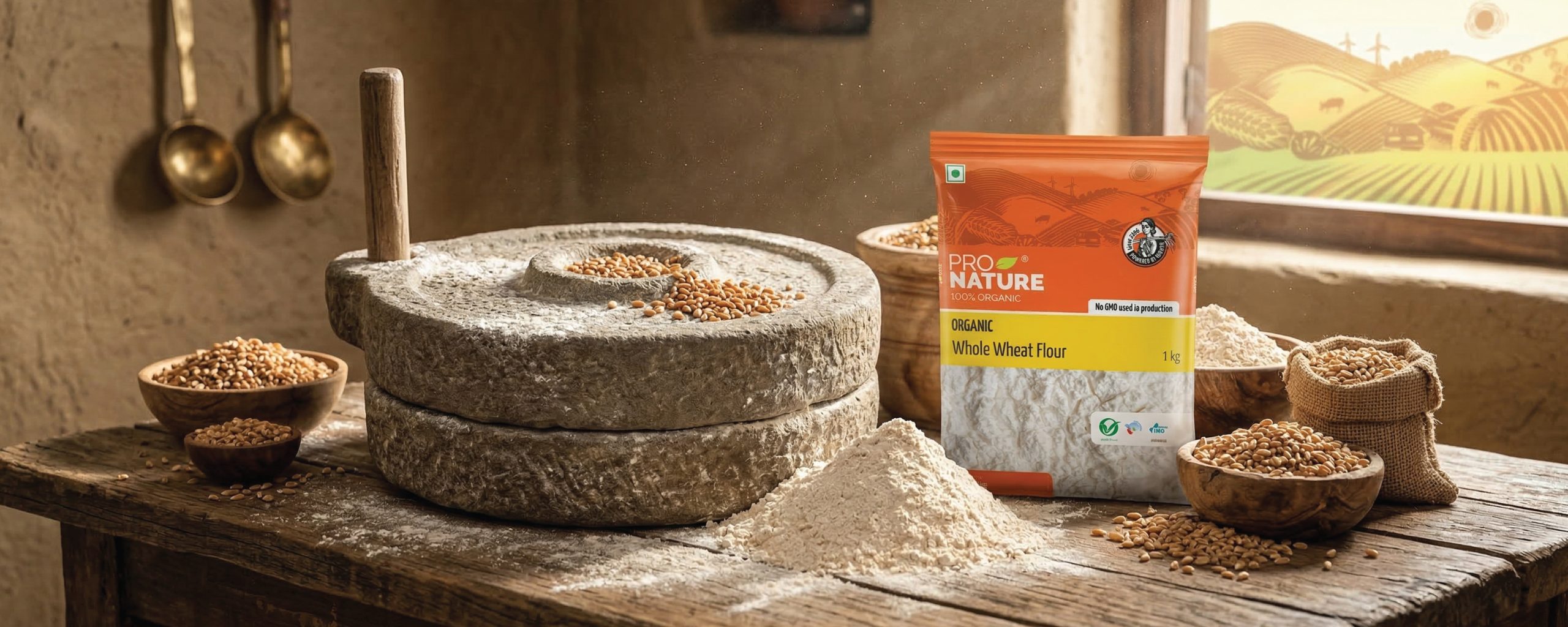
Organic atta is produced from wheat grown without synthetic pesticides, chemical fertilisers, or genetically modified seeds. It is processed using natural methods without bleaching agents or artificial whiteners.
Key benefits of organic atta:
- No chemical bleaching or artificial whitening
- Higher natural fibre content
- Retains more natural vitamins and minerals
- Free from harmful pesticide residues
- Supports gut health and digestion
- Safer for daily consumption, including for children and elderly
Organic certification ensures traceability, purity, and adherence to strict quality standards.
- Colour Isn’t Quality: The White Flour Myth
Many consumers believe whiter flour is cleaner or superior. In reality:
- Natural whole wheat flour is slightly off-white or light brown
- Colour variations depend on wheat variety and milling method
- Excessive whiteness often indicates refining and chemical treatment
Real quality comes from nutritional integrity, not appearance.
- How to Choose the Right Atta for Your Family
When buying atta, look for:
✔ Certified organic logo (India Organic / Jaivik Bharat / USDA Organic)
✔ 100% whole wheat or stone-ground
✔ No mention of bleaching agents or “improvers”
✔ Transparent sourcing and processing details
✔ Fresh milling dates for better nutrition
- Final Thoughts: Small Change, Big Impact
Switching from bleached, refined flour to organic atta may seem like a small step, but it can significantly improve your family’s daily nutrition and long-term well-being. When you choose organic atta, you choose:
- Cleaner food
- Better digestion
- Fewer chemicals
- More natural nutrition
Because what you eat every day matters the most.