What It Means for Cold-Pressed Mustard & Groundnut Oils
Introduction
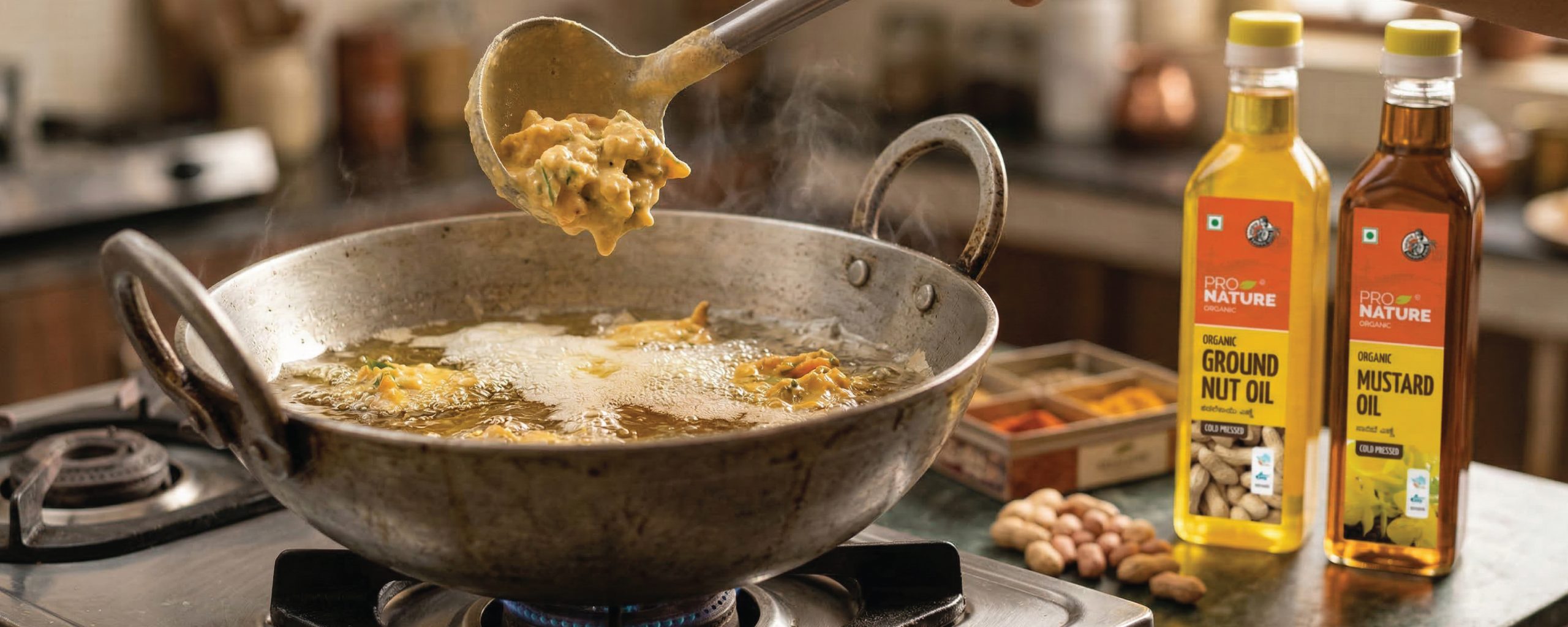
If you’ve ever noticed foam forming on the surface of oil while cooking, you’re not alone. Many home cooks become concerned when they see bubbles or foam appearing in the pan and wonder whether the oil has gone bad or if something is wrong.
In most cases, oil foaming is a natural reaction that occurs during cooking, especially when using traditional oils such as cold-pressed mustard oil or groundnut oil. Understanding why this happens can help you cook more confidently and make better choices about the oils you use in your kitchen.
Why Does Cooking Oil Foam?
Foaming happens when steam, air, and natural compounds interact with hot oil. When food is added to heated oil, moisture from the ingredients quickly evaporates and turns into steam. This creates bubbles that rise to the surface of the oil. If several bubbles accumulate together, they can appear as foam.
While bubbling is a normal part of frying or sautéing, the amount of foam can vary depending on factors such as the type of oil, cooking temperature, and the moisture content of the food.
Moisture Released from Food
One of the most common reasons for oil foaming is the presence of water in the food being cooked. When wet ingredients are added to hot oil, the water rapidly converts into steam, creating bubbles. If there is a large amount of moisture, the bubbles may collect on the surface and form foam.
This is often seen when:
- Vegetables are added immediately after washing
- Frozen foods are placed directly in hot oil
- Ingredients with marinades or batters are fried
Drying ingredients before cooking can help reduce excessive bubbling and foaming.
Natural Components in Cold-Pressed Oils
Cold-pressed oils are produced using mechanical extraction methods without high heat or chemical refining. Because of this minimal processing, they retain natural compounds present in the seeds or nuts, such as plant sterols, phospholipids, and trace proteins.
When these natural components are exposed to heat, they may slightly affect the oil’s surface behaviour and lead to light foaming. This is particularly noticeable in cold-pressed mustard oil and groundnut oil, which are known for their strong natural composition.
Unlike highly refined oils, cold-pressed oils maintain more of their original nutritional and aromatic characteristics. As a result, minor foaming during cooking can simply be part of their natural behaviour.
High Cooking Temperatures
Oil heated beyond its ideal cooking temperature can also begin to degrade. Extremely high heat speeds up oxidation and other reactions within the oil, which may contribute to foaming.
Maintaining a controlled temperature during frying helps preserve the quality of the oil and ensures better cooking results.
Is Foaming in Mustard or Groundnut Oil a Concern?
In most cases, mild foaming is not a problem. When using cold-pressed oils, slight foaming can occur because the oil still contains natural elements from the seeds or nuts it was extracted from.
However, persistent or heavy foaming combined with unpleasant odour or discolouration may indicate that the oil has been overheated or reused too many times.
Simple Tips to Reduce Oil Foaming
A few simple practices can help manage excessive foaming while cooking:
- Dry ingredients properly before frying
- Avoid adding too much food at once
- Maintain moderate cooking temperatures
- Use fresh oil when possible
- Filter or strain oil after frying to remove particles
These steps help maintain oil quality and make cooking smoother.
Final Thoughts
Foaming in cooking oil is a common kitchen observation and is usually part of the natural cooking process. With cold-pressed oils such as mustard and groundnut oil, mild foaming can occur because the oils retain their natural components and are less processed than refined alternatives.
Understanding this behaviour allows home cooks to recognise the difference between normal cooking reactions and signs that oil needs to be replaced. With proper handling and cooking practices, cold-pressed oils continue to be a flavourful and traditional choice for everyday cooking.