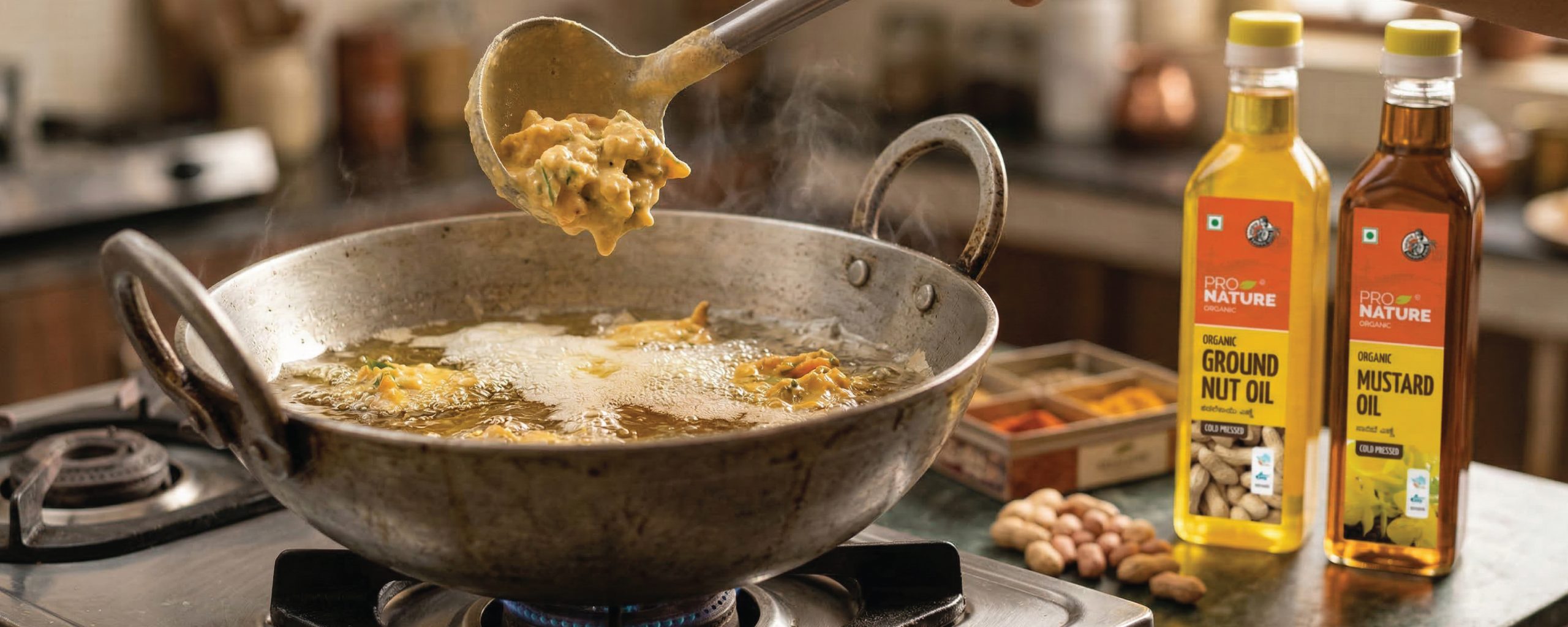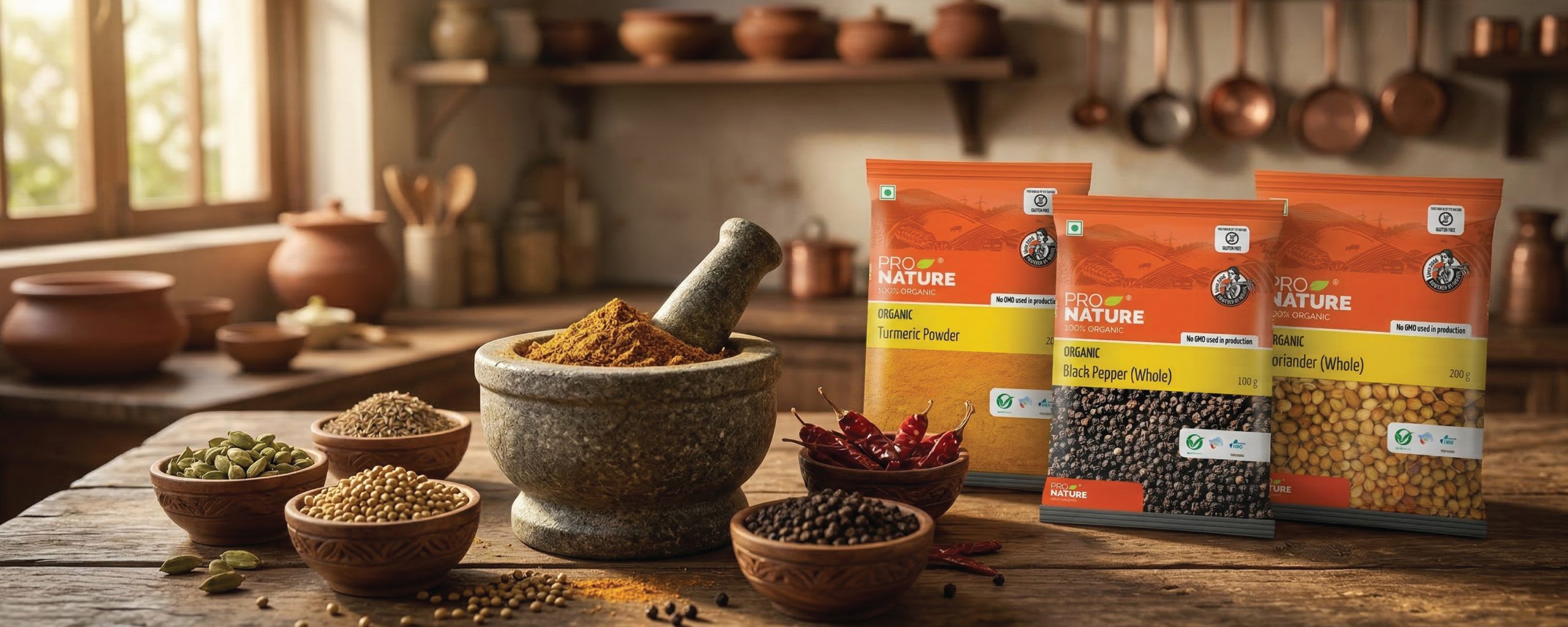
In the rhythm of an Indian kitchen, the whistling of the pressure cooker and the aroma of tempering spices (tadka) symbolize health and nourishment. But beneath the surface of our daily dal-chawal, a silent crisis is simmering.
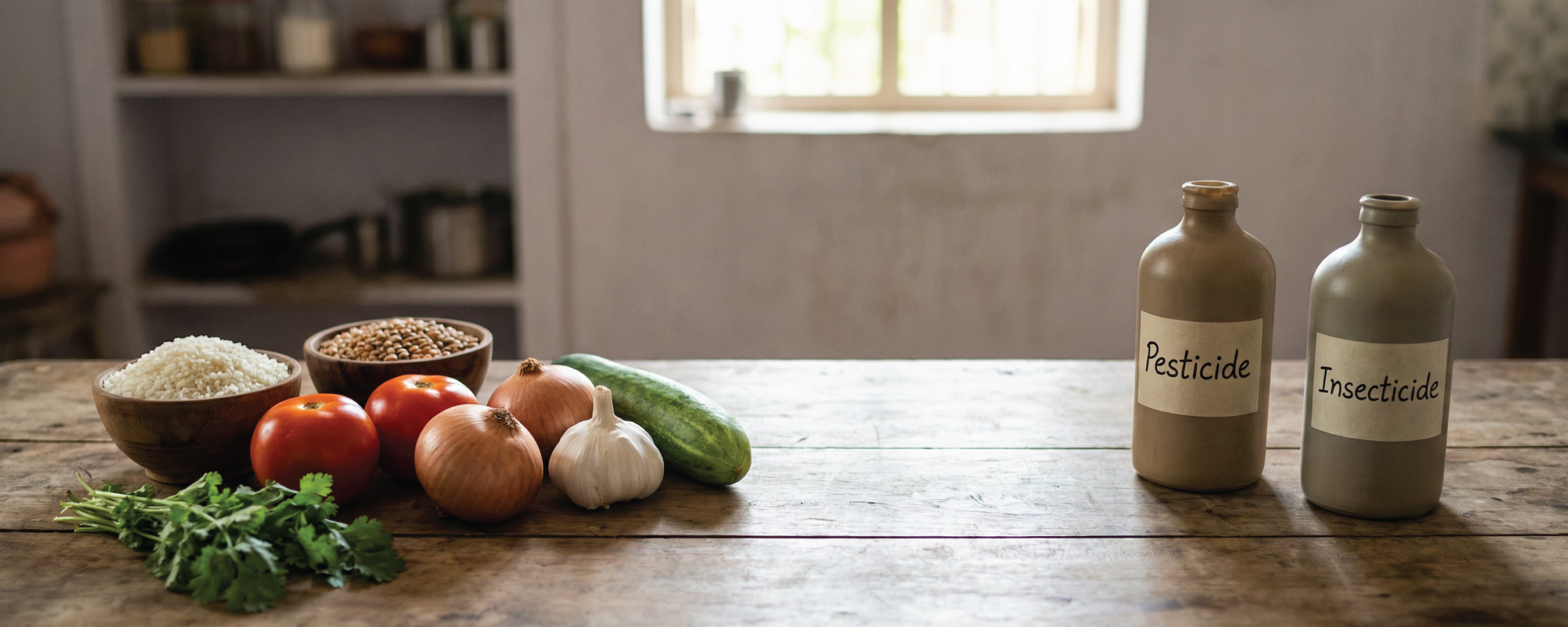
While we often focus on “eating healthy” by choosing more vegetables and grains, we rarely talk about the invisible chemical load that comes with them. From the wheat used for our rotis to the turmeric in our curries, pesticide residues have quietly infiltrated the Indian household, posing risks we can no longer afford to ignore.
The Invisible Guest: Pesticides in the Indian Kitchen
India is one of the world’s largest consumers of pesticides. While these chemicals were designed to protect crops, they don’t simply disappear after the harvest.
- The Persistence of Residues: Studies by the FSSAI and independent researchers have found that over 50% of food samples in India contain pesticide residues. Alarmingly, many of these—including staples like rice and pulses—carry residues that exceed “Safe Limits.”
- The “Cocktail Effect”: We don’t just eat one chemical; we eat a combination. When your meal includes rice, dal, and vegetables all grown with different pesticides, your body faces a “chemical cocktail” that is much harder for the liver to detoxify.
- Systemic Absorption: Many modern pesticides are “systemic,” meaning they are absorbed into the plant’s roots and tissues. This means no amount of washing or peeling can fully remove them from your grains and lentils.
The Health Cost: Why It Matters for Your Family
The impact of these chemicals isn’t always immediate, which is why it’s often overlooked. However, long-term exposure—especially through staples we eat three times a day—can lead to serious health complications:
- Hormonal Disruptors: Many pesticides act as endocrine disruptors, interfering with natural hormones. This has been linked to rising cases of thyroid issues, PCOD, and reproductive challenges in urban Indian households.
- Impact on Children: Children are not just “small adults.” Their developing organs and immune systems are far more vulnerable to toxins. Early exposure is increasingly linked to ADHD, developmental delays, and childhood allergies.
- Chronic Diseases: Long-term accumulation of these toxins in the body is a known risk factor for various cancers, neurological disorders like Parkinson’s, and weakened immunity.
Why “Organic Staples” are the Game-Changer
The word “Organic” is often associated with expensive salads, but the real power of organic lies in our staples. Since grains, pulses, and oils make up 70–80% of the Indian plate, switching just these items can reduce your chemical intake by a massive margin.
| Conventional Staples | The Organic Difference |
| Pesticide Residues | Grown using neem oil and bio-fertilizers; 0% synthetic chemicals. |
| Polished for Shine | Usually unpolished, retaining the nutrient-rich bran and fiber. |
| GMO Seeds | Uses traditional, heirloom seeds that are naturally hardy. |
| Nutrient Value | Often lower due to soil depletion from chemical fertilizers. |
Making the Switch: A Practical Guide
You don’t have to change your entire lifestyle overnight. Start with the “Foundation” of your kitchen:
- Prioritize the Big Three: Start by replacing Atta (Wheat), Rice, and Dal. These are consumed in the highest quantities and offer the most “bang for your buck” in terms of health impact.
- Look for Certification: In India, ensure your products carry the Jaivik Bharat logo or NPOP/PGS-India certifications. These are your only guarantees of authenticity.
- Taste the Truth: You’ll notice that organic pulses take slightly longer to cook and have a deeper, earthier aroma. This is because they haven’t been treated with “polishing” agents like marble powder or oil.
Conclusion: Investing in Your “Internal Environment”
We spend thousands on air purifiers and water filters to protect ourselves from external pollution. Yet, the most direct way we interact with the environment is through the food we swallow.
Switching to organic staples is more than just a food trend; it is a vital shield for your family’s health. By choosing organic, you aren’t just buying food—you are buying peace of mind and supporting a chemical-free future for India’s soil and its people.