For generations, millets have been a familiar part of Indian kitchens. From ragi mudde and bajra rotis to jowar bhakri and millet-based porridges, these humble grains have been part of traditional diets across the country.
Then came polished rice, refined wheat and changing food habits, and millets slowly moved away from the centre of the Indian plate.
Today, they're making a comeback.
But what makes these ancient grains so interesting? Beyond the trend, millets have a diverse nutritional profile, are naturally gluten-free, and can be used in everything from everyday meals to modern breakfast bowls and baked foods.
In this article, we'll explore the key millet benefits, understand the nutritional profile of different varieties, and look at why the benefits of eating millets go beyond what's on the nutrition label.
What Are Millets?
Millets are a group of small-seeded cereal grains that have been cultivated for thousands of years, particularly across Asia and Africa. Unlike a single grain such as rice or wheat, "millets" refers to several different grains, each with its own nutritional profile, flavour and texture.
Some of the commonly consumed types of millets in India include:
- Ragi or finger millet
- Bajra or pearl millet
- Jowar or sorghum
- Foxtail millet
- Little millet
- Kodo millet
- Barnyard millet
- Proso millet
This variety is one reason millets can add more diversity to everyday meals.
Millet Nutrition: What's Inside Every Grain?
Understanding the benefits of millet starts with understanding what's inside the grain. Millets are primarily made up of carbohydrates, like other cereal grains, but they also provide protein, dietary fibre and a range of minerals and B vitamins. Their nutritional composition varies depending on the variety.
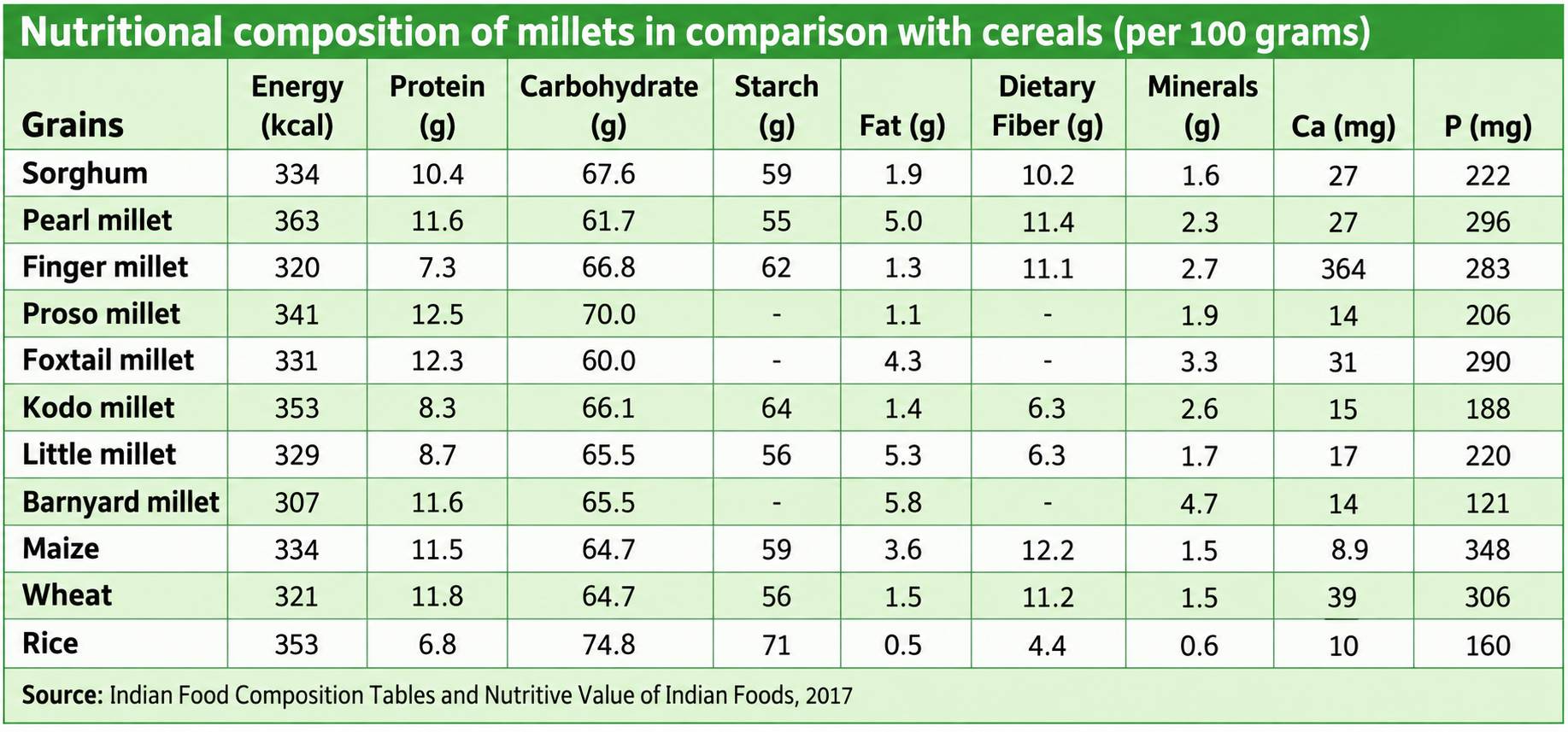
Here's a quick look at some commonly consumed millets:
That's quite a range for a family of grains. And it brings us to the reasons millets continue to earn a place in modern kitchens.
5 Millet Benefits Worth Knowing
Millets aren't a magic ingredient, and no single grain can replace a balanced diet. But their nutritional diversity, versatility and agricultural characteristics make them an interesting addition to everyday meals.
Let's look at what makes them stand out.
1. They Provide Dietary Fibre Along With Everyday Nutrition
One of the key millet benefits is their dietary fibre content. For example, sorghum/jowar contains around 10.2 g of dietary fibre per 100 g, while ragi/finger millet contains around 11.1 g per 100 g, according to Indian food composition data.
The amount varies between millet varieties, but this makes millets a useful way to add more fibre to cereal-based meals.
And you don't have to completely change your cooking. Millets can replace or be combined with rice in dishes such as khichdi, pulao and pongal, or used as flour for rotis, dosas and baked foods. Sometimes, improving everyday meals is simply about making small swaps.
2. They Offer a Variety of Essential Minerals
Millets aren't just about carbohydrates. Different varieties provide minerals such as calcium, iron, magnesium, phosphorus and zinc.
Ragi stands out particularly for its calcium content, with around 364 mg per 100 g in the Indian Food Composition Tables. Pearl millet, meanwhile, provides around 296 mg of phosphorus per 100 g, while several millet varieties also contribute magnesium and iron.
3. They're Naturally Gluten-Free
Looking for naturally gluten-free grains? Millets are one option.
Ragi, bajra, jowar, foxtail millet, little millet, kodo millet and barnyard millet are naturally gluten-free grains. That makes them useful for people who need or prefer to avoid gluten, while also giving everyone else more variety in their grain choices.
However, if someone has coeliac disease or needs to follow a strict gluten-free diet, it's important to check packaging and processing conditions because cross-contact can happen during processing.
The grain may be naturally gluten-free. The entire food product still needs to be handled appropriately.
4. There's a Millet for Almost Every Kind of Meal
One of the practical benefits of eating millets is how easily they fit into everyday cooking. Their different textures, flavours and forms mean there's a millet for almost every kind of meal.
Millets can be cooked whole, ground into flour, used in batters or incorporated into ready-to-cook dishes.
Think:
- Ragi dosa for breakfast
- Jowar roti for lunch
- Bajra rotis with sabzi
- Foxtail millet upma
- Little millet khichdi
- Kodo millet pulao
- Barnyard millet pongal
- Millet flour in baked foods
Different varieties also bring different textures and flavours. Some are mild and slightly nutty, while others have a more pronounced earthy character. This makes it easier to experiment without making your meals feel repetitive.
5. They're Crops That Fit India's Changing Climate
There's another reason millets are getting attention beyond the kitchen. Millets are known for their ability to grow in relatively harsh and dry conditions and are generally suited to rainfed and semi-arid farming systems.
They require fewer agricultural resources than some water-intensive cereal crops, although the exact water and input requirements vary by crop, location and farming practice.
This resilience has made millets increasingly relevant to conversations around food and nutritional security.
India is also one of the world's leading millet producers. Government data shows that India produced 180.15 lakh tonnes of millets in 2024–25, an increase from the previous year.
So the millet revival isn't only about what goes on our plate. It is also about which crops can continue to play a role in India's food system.
How to Add More Millets to Your Diet
You don't need to replace every grain in your kitchen overnight. Start small.
Try replacing rice with foxtail or little millet once or twice a week. Use ragi flour for dosa or porridge. Experiment with jowar or bajra flour for rotis. Or try a millet-based khichdi for a simple one-pot meal.
And remember, different varieties have different nutritional profiles, so rotating between millets can be a simple way to add variety to your meals.
Why Choose Organic Millets?
Found your favourite millet? There's one more thing to check: how it was grown and processed.
Organic millets are produced according to recognised organic farming standards. When buying them, look for an appropriate organic certification on the package and check the ingredient list.
Organic certification tells you about the farming and production standards followed, while processing refers to how the grain is handled after harvest.
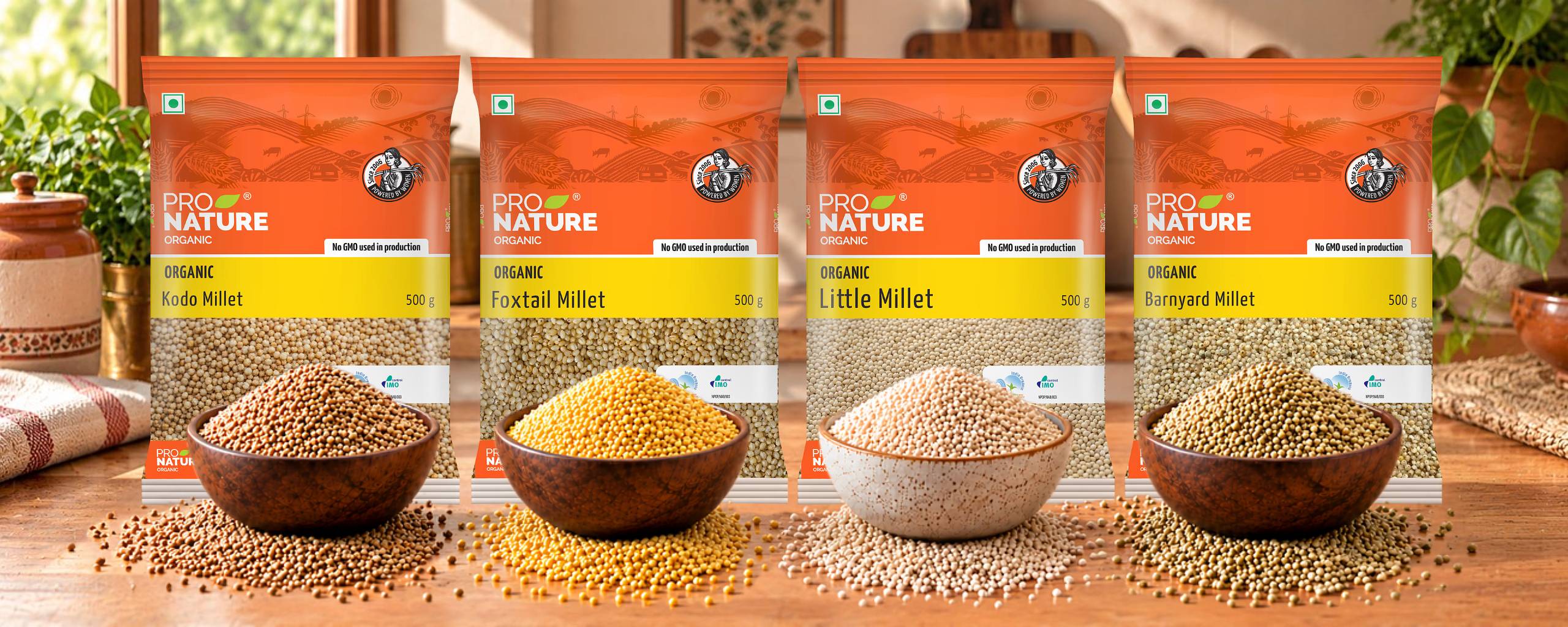
Pro Nature Organic offers a range of certified organic millets, including Foxtail Millet, Little Millet, Kodo Millet and Barnyard Millet, making it easier to bring different varieties into everyday cooking.
Whether you're making a quick upma, a comforting khichdi or a simple millet-based meal, the idea is the same: bring traditional grains back into the everyday kitchen in a way that feels simple and practical.
Conclusion
Millets may be having a modern comeback, but there's nothing new about them.
For generations, Indian households have cooked with ragi, bajra, jowar and other millets as part of everyday meals.
What makes them relevant today is the combination of things they bring to the table: dietary fibre, minerals, plant-based protein, natural gluten-free status, culinary versatility and resilience as crops.
Looking to bring more variety to your pantry? Explore Pro Nature Organic's range of millets and find a grain that works for your everyday meals.
Frequently Asked Questions
What are the main benefits of millets?
Millets provide dietary fibre, protein and several minerals and B vitamins, depending on the variety. They are also naturally gluten-free and can be used in a wide range of everyday dishes.
Which millet is best?
There is no single "best" millet. Different varieties have different nutritional profiles. Ragi is particularly notable for its calcium content, while pearl millet is a good source of iron. Choosing different varieties can add nutritional and culinary diversity to your diet.
Are millets gluten-free?
Yes. Common millets such as ragi, bajra, jowar, foxtail, little, kodo and barnyard millet are naturally gluten-free. People following a strict gluten-free diet should also check packaging and processing information to avoid cross-contact.
What are the different types of millets?
Common types of millets consumed in India include jowar, bajra, ragi, foxtail millet, little millet, kodo millet, barnyard millet and proso millet.
How can I include millets in everyday meals?
Millets can be used in rotis, dosas, idlis, porridge, upma, khichdi, pongal, pulao and baked foods. You can also substitute millet for rice in several everyday recipes.
Are millets better than rice?
It's not necessary to think of one grain as universally better than another. Millets and rice have different nutritional profiles, and both can be part of a varied diet. Choosing less-refined grains and rotating different cereals can add variety to everyday meals.