Should the tadka for dal go into hot oil or ghee? For crisp pakoras, should you reach for cooking oil? In Indian kitchens, the answer often depends on the dish, the region and the flavour you prefer.
The ghee vs oil debate isn't about picking one winner. Ghee adds a rich, buttery aroma, while cooking oils vary in flavour and composition. Both have a place in everyday cooking, but they aren't nutritionally identical.
Here's how they compare, which works best for different Indian dishes, and what to consider when choosing between them.
Ghee vs Oil: What's the Difference?
Ghee and cooking oils are both concentrated sources of fat, but they differ in their source, composition and flavour.
Ghee is made by heating butter to remove its water and separate the milk solids, leaving behind milk fat. Cooking oils are extracted from sources such as mustard seeds, groundnuts, sunflower seeds and coconuts.
Here's how they compare.
| Feature | Ghee | Cooking Oil |
|---|---|---|
| Source | Milk fat | Plant-based sources |
| Flavour | Rich, nutty and aromatic | Neutral or distinctive, depending on the oil |
| Fat composition | High in saturated fat | Varies by oil; many contain more unsaturated fats |
| Common uses | Tadka, finishing dal and rice, rotis, parathas and sweets | Tadka, curries, sabzis, sautéing and frying |
The main difference isn't simply how they taste. Their nutritional composition also matters when deciding how much to use.
Nutritional Difference in Ghee vs Oil
Ghee and cooking oils differ in their fatty-acid composition and the nutrients they provide. Ghee contains a high proportion of saturated fat and small amounts of fat-soluble vitamins, including vitamins A, E and K. The amounts can vary depending on the source and preparation.
Many commonly used vegetable oils, including sunflower and groundnut oil, contain more unsaturated fats. These oils also differ in their vitamin E content and fatty-acid profiles. Some oils provide essential fatty acids, such as linoleic acid, which the body needs from food. Therefore, the nutritional value of cooking oil depends on the type you choose.
The ICMR–National Institute of Nutrition's Dietary Guidelines for Indians 2024 emphasise choosing a balanced mix of dietary fats and using visible fats, including ghee, butter and cooking oils, in moderation. Understanding the differences between these fats can help you make informed choices based on your cooking needs and overall diet.
Which Is Better for Different Indian Dishes?
The easiest way to choose between ghee and oil is to consider the flavour and cooking method each dish requires.
| Dish or cooking method | Often a good fit | Why it works |
|---|---|---|
| Dal, khichdi or steamed rice | Ghee or oil for tadka; a little ghee to finish | A jeera or hing tadka in ghee gives a richer aroma, while oil suits everyday cooking. A small spoonful of ghee at the end adds flavour. |
| Vegetable or paneer stir-fry | Oil | A neutral or flavourful oil can coat ingredients without making the dish taste buttery. |
| Rotis and parathas | Either | Ghee gives a familiar rich finish; oil offers a different flavour. Use a light hand with both. |
| Pakoras and other fried snacks | Suitable cooking oil | Choose an oil intended for cooking at the required temperature. Avoid overheating or repeatedly reusing frying oil. |
| Halwa, laddoo and other sweets | Ghee | Ghee contributes a characteristic aroma and richness that many traditional recipes rely on. |
| Pickles and regional dishes | Depends on the recipe | Mustard, sesame and other oils can provide the distinct flavour a dish is known for. |
These are general suggestions, not strict rules. A dish can be prepared differently depending on regional traditions and personal preference.
When Does Ghee Make More Sense?
Ghee is particularly useful when its aroma and flavour are part of the dish.
A ghee tadka of jeera, hing or dried red chillies gives dal a distinctive aroma. A spoonful over hot dal, khichdi or rice adds richness without requiring you to cook the entire dish in ghee. It is also commonly used in sweets such as halwa, besan laddoos and mysore pak, where its characteristic flavour matters
Ghee has a relatively high smoke point compared with butter, making it suitable for several cooking applications. However, smoke point alone doesn't determine whether a fat is the best nutritional choice.
Ghee is valued for its distinctive flavour, aroma and versatility. Since it is high in saturated fat, use it in quantities that fit your overall diet rather than treating it as a health supplement.
When Is Oil the Better Choice?
Cooking oil is often more practical for everyday sautéing, stir-frying and deep-frying. The best option depends on the recipe, the required temperature and the flavour you want.
- Groundnut oil: Its mild, nutty flavour suits everyday cooking, sautéing and frying.
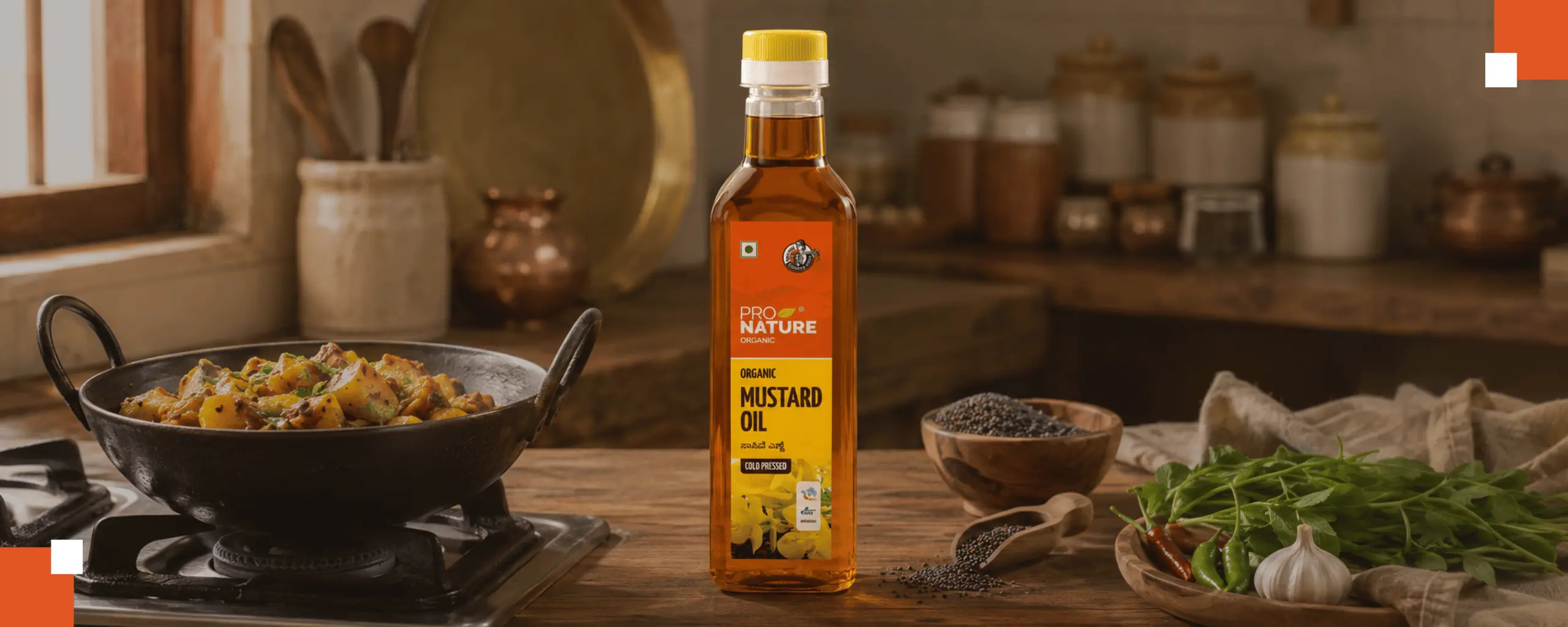
- Mustard oil: Its pungent flavour works well in many regional dishes and pickles.
- Sunflower oil: Its relatively neutral flavour suits a range of everyday preparations.
- Sesame oil: Its distinctive nutty flavour complements certain regional dishes.
Different cooking oils vary in their fatty-acid composition, so choosing one is about more than flavour alone.
For frying, choose an oil suitable for the cooking temperature. Avoid heating it until it smokes or repeatedly reusing frying oil, as repeated heating can cause deterioration.
So, Which Is Healthier: Ghee or Oil?
There isn't a universal answer. The comparison depends on the oil, the amount used and your overall diet.
Ghee contains more saturated fat than many common vegetable oils, while oils vary in their balance of saturated and unsaturated fats. A vegetable oil isn't automatically a better choice if you use excessive quantities or repeatedly overheat it.
A practical approach is to use ghee where its flavour adds the most value and choose suitable oils for everyday cooking. You can also rotate different oils over time rather than relying on a single variety.
If you've been advised to limit saturated fat or have a health condition that affects your dietary choices, consult a qualified healthcare professional or dietitian.
5 Simple Habits for Using Ghee and Oil in a Better Way
A few practical habits can help you use cooking fats more thoughtfully.
- Measure your portions: Use a spoon rather than pouring directly from the bottle.
- Choose the right fat for the dish: Consider the flavour and cooking method before deciding.
- Avoid overheating: Stop heating fat if it begins to smoke.
- Limit oil reuse: Avoid repeatedly reheating oil used for deep-frying.
- Store properly: Keep ghee and oils in suitable, tightly closed containers away from direct sunlight and moisture.
Why Choose Pro Nature Ghee and Cooking Oils?
When a cooking fat contributes directly to a dish's flavour, it is worth checking the product and how it is made.
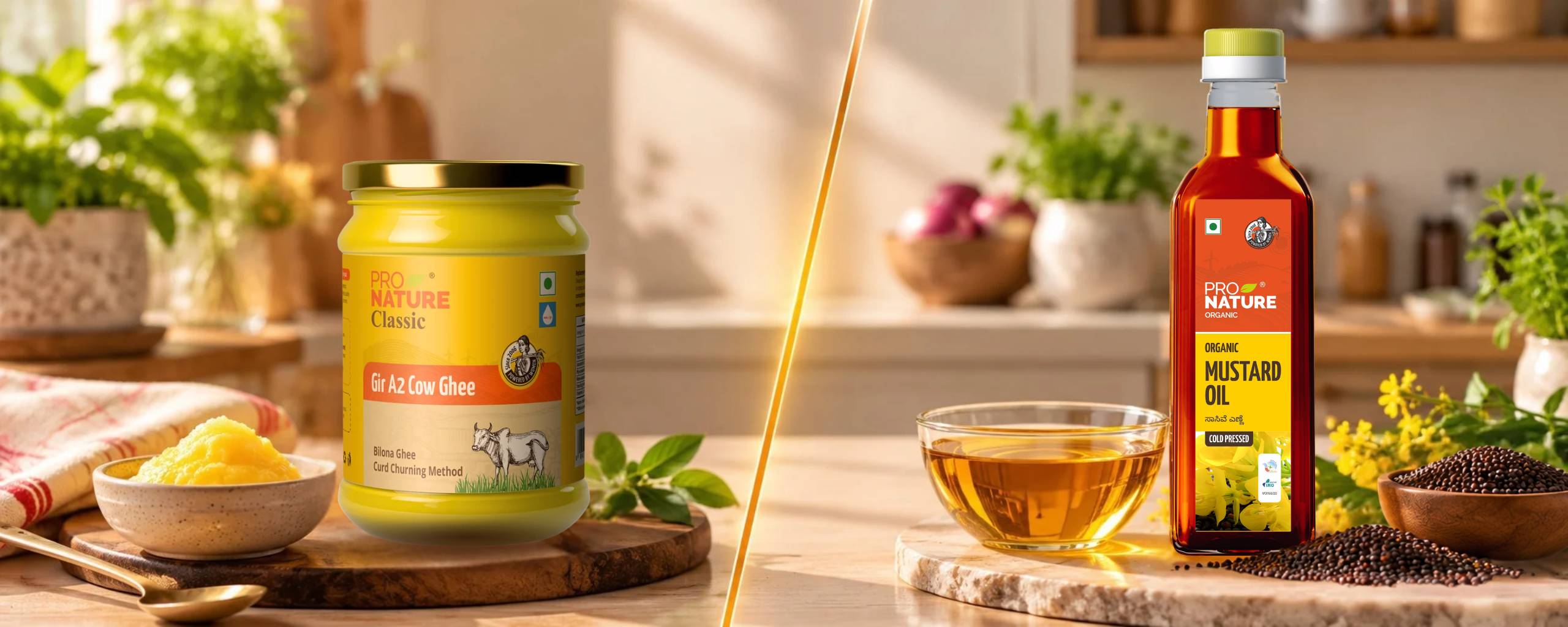
Pro Nature's Gir A2 Cow Ghee is made from the A2 milk of Gir cows using the Bilona method. Curd is churned to obtain cultured butter, which is then slowly simmered to make ghee. It can be used for everyday cooking, finishing dishes, rotis and traditional sweets.
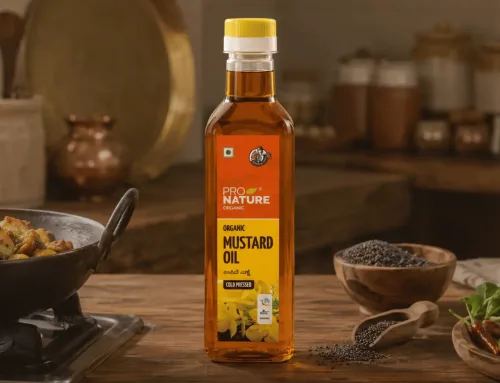
For everyday cooking, Pro Nature offers cold-pressed groundnut oil, mustard oil and sunflower oil, along with sesame oil and virgin coconut oil. These provide different flavour options for different recipes.
The idea isn't to replace every oil with ghee. Choose the product that suits the dish you're preparing.
Frequently Asked Questions
Is ghee better than oil for Indian cooking?
It depends on the dish. Ghee adds a rich flavour to tadka, rotis, parathas and sweets, while cooking oils are useful for tadka, curries, sabzis, sautéing and frying. Neither is the best choice for every recipe.
Is ghee healthier than cooking oil?
Not necessarily. Ghee is high in saturated fat, while many vegetable oils contain more unsaturated fats. The comparison depends on the type of oil, the quantity used and your overall diet.
Can I use ghee instead of oil for cooking?
You can substitute ghee for oil in some recipes, but the flavour and final result may change. Consider whether ghee's richer taste suits the dish before making the substitution.
Which is better for frying, ghee or oil?
A suitable cooking oil is often more practical for deep-frying. The right choice depends on the oil's properties and the cooking temperature. Avoid overheating or repeatedly reusing fats.
What are the benefits of A2 cow ghee?
A2 cow ghee is made from milk containing the A2 beta-casein protein. Pro Nature’s Gir A2 Cow Ghee is made using the traditional Bilona method, where curd is churned into butter and slowly simmered. In cooking, it is valued for its rich aroma and flavour.
Can I use ghee and oil together?
Yes. You can use oil for the main cooking process and a small amount of ghee for flavour or finishing, depending on the recipe. Remember that both contribute to your overall fat intake.
Which oil is best for Indian cooking?
There isn’t one best oil for every dish. Groundnut oil suits everyday cooking and frying, mustard oil works well in many regional dishes and pickles, and sunflower oil has a neutral taste for daily use. Using different oils for different dishes gives you a range of flavours.