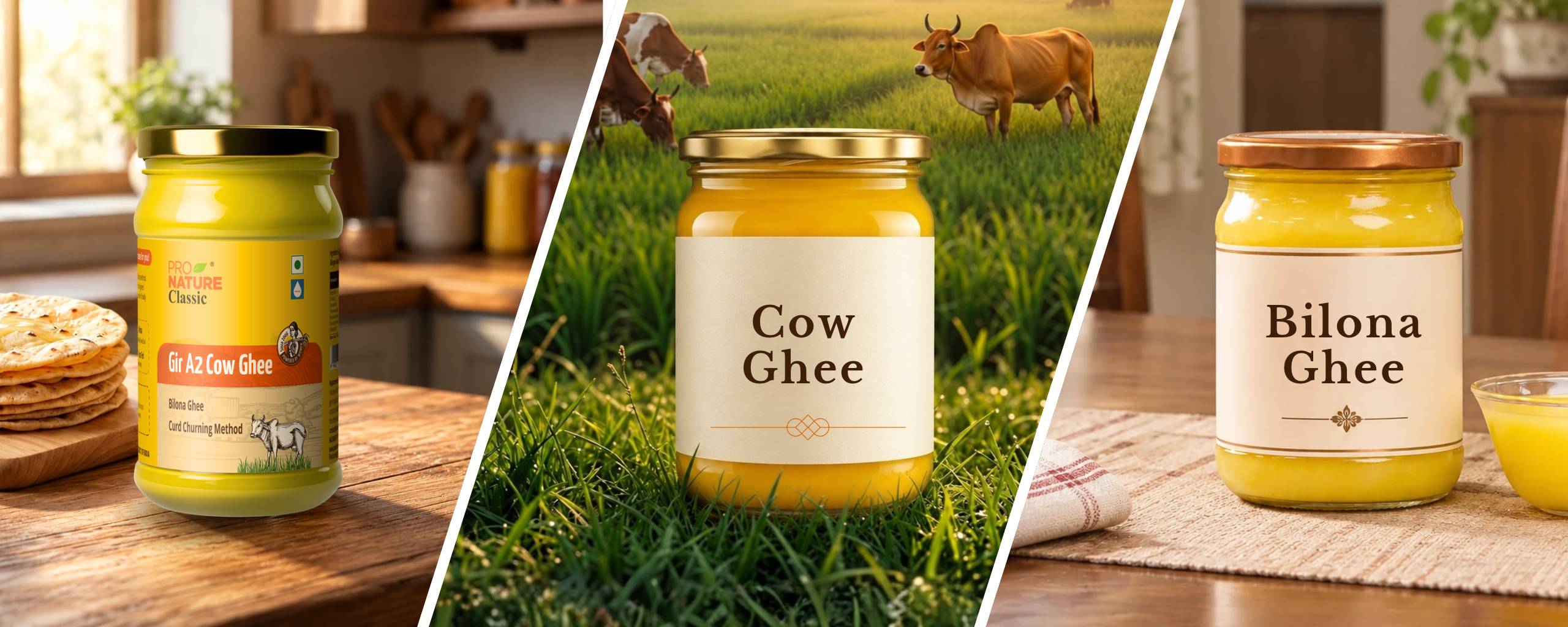
Buying ghee used to be a simple choice. Now, the labels can make you pause. A2 ghee, Gir cow ghee, Bilona ghee: are they different products, different ways of making ghee, or simply different names for the same thing?
Understanding this difference can help you look beyond the claims on a jar and make a more informed choice.
A2 Ghee vs Cow Ghee vs Bilona Ghee: Key Differences
Before looking at each term in detail, here's a quick comparison.
| Feature | A2 Ghee | Cow Ghee | Bilona Ghee |
|---|---|---|---|
| What it describes | A2 beta-casein type in the source milk | Source of the milk fat | Preparation method |
| Key distinction | Milk protein profile | Cow's milk | Traditional curd-churning process |
| Can the terms overlap? | Yes | Yes | Yes |
| What to check | Information supporting the A2 claim | Clear information about the milk source | Details of the preparation process |
The important distinction is that these terms aren't mutually exclusive. Ghee can be made from cow's milk associated with the A2 beta-casein type and prepared using the Bilona method.
What Is A2 Ghee?
A2 refers to a variant of beta-casein, a protein naturally found in cow’s milk. A1 and A2 are two commonly discussed variants of this protein, which differ in their amino acid sequence.
When you choose A2 ghee, the label refers to the type of milk used to make it. It is generally sourced from cows that produce A2 beta-casein, including certain cattle breeds.
However, ghee consists predominantly of fat, with only trace amounts of protein.
Does A2 Ghee Have a Specific Preparation Method?
No. A2 does not specify how the milk is converted into ghee. The product may be prepared using different manufacturing methods.
A cattle breed name alone should not be treated as definitive evidence of a product's A2 claim. Clear sourcing information and appropriate supporting evidence are more useful when evaluating such claims.
What Is Cow Ghee?
Cow ghee is made from the fat of cow's milk. During production, the milk fat is heated and processed to remove most of the water and milk solids that are not fat. The result is a concentrated milk-fat product with its characteristic aroma, flavour and texture.
Cow ghee can be made using different preparation methods. Its source and production process can influence the final product's characteristics.
Is Cow Ghee Always A2 Ghee?
No. The term cow ghee identifies the animal source, but it does not establish which beta-casein variant is present in the source milk.
Cow's milk can contain different beta-casein variants. Therefore, a product labelled cow ghee should not automatically be assumed to be A2 ghee. If the A2 claim matters to you, look for clear information about the milk source and how that claim is supported.
What Is Bilona Ghee?
Bilona ghee refers to ghee made using a traditional process in which curd is churned to obtain butter before the butter is heated to produce ghee.
How Is Bilona Ghee Prepared?
Unlike methods that clarify cream or butter directly, Bilona begins with curd, making the preparation process distinct.
The traditional Bilona ghee method involves three main steps:
- Step 1: Milk is cultured into curd.
- Step 2: The curd is churned to separate the butter.
- Step 3: The butter is slowly simmered to remove moisture and separate the milk solids, to obtain ghee.
What Makes Bilona Ghee Different?
The main distinction is the preparation method. Unlike methods that begin with separated cream or butter, the traditional Bilona process involves churning curd to obtain butter.
This process can influence the ghee's flavour and aroma. However, the word Bilona does not identify the animal source or the beta-casein type of the milk. Bilona ghee may be made from cow's or buffalo's milk, depending on the producer.
The preparation method alone also does not prove that one ghee is nutritionally superior to another.
How to Choose the Right Ghee
- Check the milk source: Look for clear information about whether the ghee is made from cow's or buffalo's milk. If a particular breed is mentioned, check what information the manufacturer provides about sourcing.
- Understand the A2 claim: If the product is labelled A2, look for transparent information supporting the claim. The breed name alone is not conclusive proof.
- Check the preparation method: If a product is described as Bilona ghee, see whether the manufacturer explains how the curd is churned and the butter is processed.
- Read the product details: Review the ingredients, manufacturer information, batch details and applicable food licence information.
- Look for quality assurance: Transparent quality-control practices and relevant testing information can help you assess the product.
Conclusion
The next time you pick up a jar of ghee, look beyond the label. A2 tells you about the source milk's beta-casein type, cow ghee identifies the milk source, and Bilona describes how the ghee is made. These terms can overlap, but each tells you something different about the product.
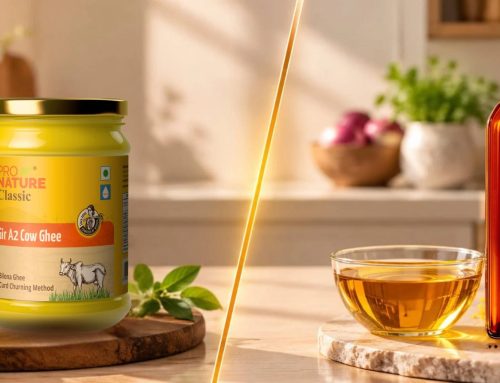
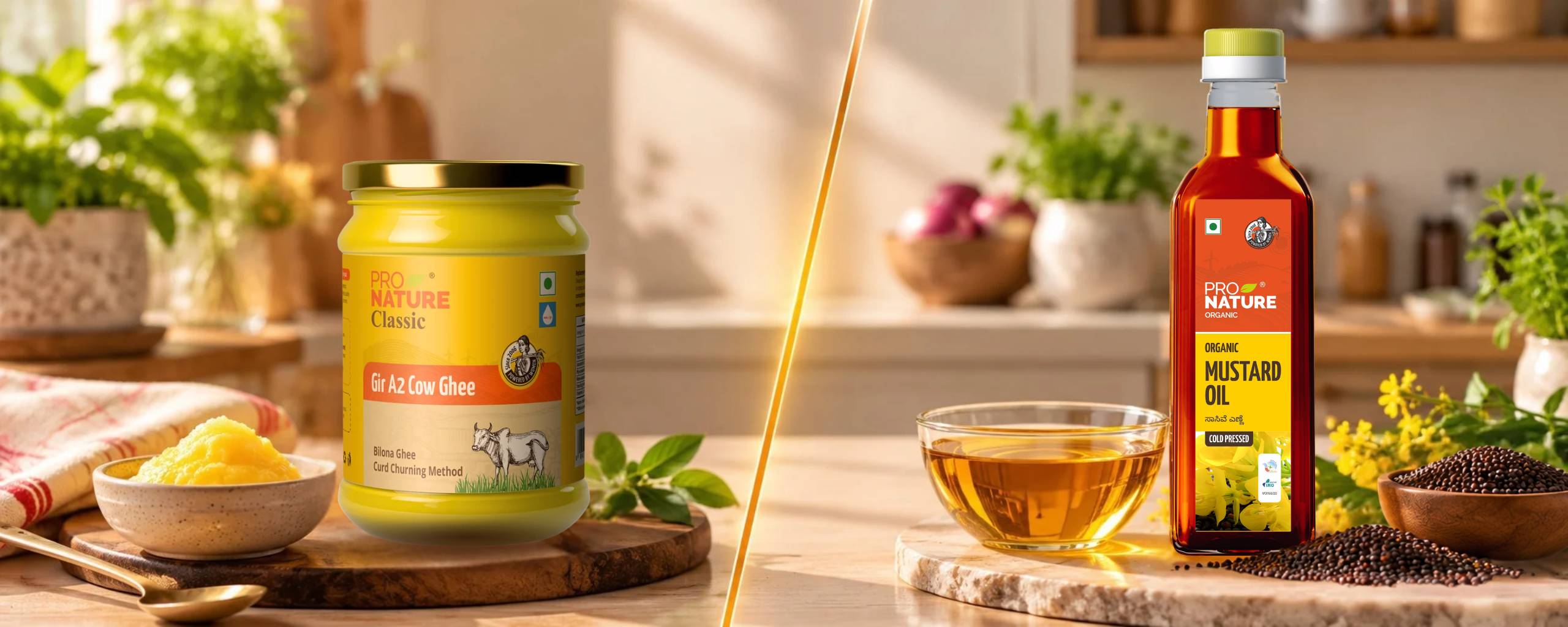
For instance, Pro Nature Gir A2 Cow Ghee brings together all three: A2 milk sourcing, cow's milk from Gir cows, and the traditional Bilona method. Understanding what each term means helps you make a more informed choice instead of relying on a label alone.
Frequently Asked Questions
Is Bilona Ghee the Same as A2 Ghee?
No, A2 refers to the milk’s beta-casein protein type, while Bilona describes the preparation method, which involves churning curd to extract butter before heating it into ghee. A product can be both.
Is All Cow Ghee A2 Ghee?
No, cow ghee is not necessarily A2 ghee. Cows can produce milk containing different beta-casein variants. The term cow ghee confirms the animal source but does not establish the milk’s protein type.
Is Bilona Ghee Healthier Than Regular Ghee?
The preparation method alone does not establish superior health benefits. The nutritional composition of ghee and the amount consumed should be considered as part of the overall diet.
How Can You Identify Authentic A2 Bilona Ghee?
Check whether the brand provides clear milk-sourcing details and supporting evidence for its A2 claims. Look for an explanation of the Bilona process, including curd churning and butter clarification. Quality documentation and batch-specific testing can also help you evaluate the product.
A2 Ghee, Cow Ghee, or Bilona Ghee: Which Ghee Is Best?
The best choice depends on what matters to you. If you prioritise the source milk, look for clear information about the A2 claim. If you want cow's milk ghee, check the stated source. If the preparation method matters to you, look for details of the Bilona process. You can also use Pro Nature Gir A2 Cow Ghee, which combines all three characteristics.