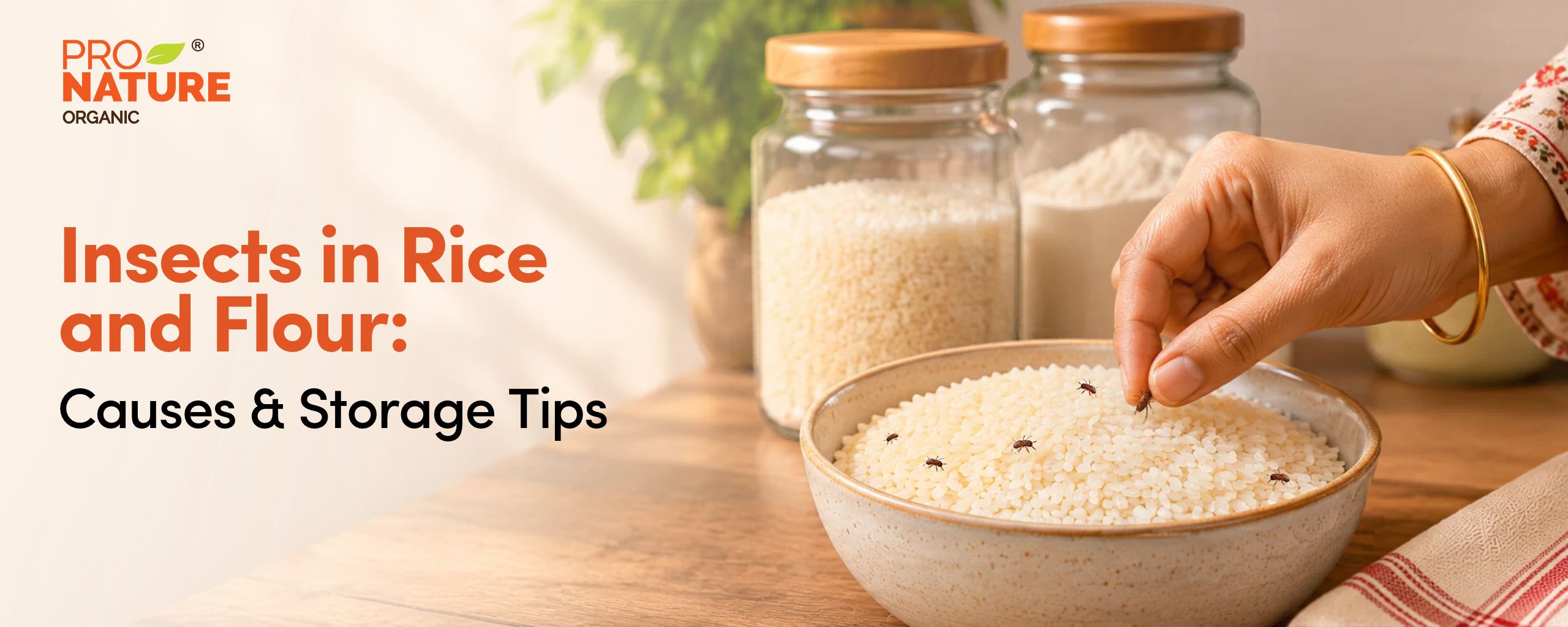
Even in a clean and well-maintained kitchen, stored staples such as rice, dal and flour can sometimes attract pantry insects.
These insects thrive in certain environmental conditions, particularly when food is exposed to warmth, humidity or prolonged storage.
Understanding how pantry pests develop and adopting the right storage practices can help reduce the risk of infestation and keep your everyday staples in good condition.
Why Do Insects Appear in Rice, Dal and Atta?
Rice, dal and atta are commonly stored for extended periods, making proper storage essential.
Pantry pests such as rice weevils, flour beetles and pulse beetles are naturally associated with stored grains and other dry food products.
Their development and multiplication are influenced by factors such as temperature, humidity, storage duration and exposure to other infested food materials.
For example, rice weevils can develop inside individual grains, making early signs of infestation difficult to detect.
Warm and humid conditions can accelerate their life cycle, which is why maintaining a cool, dry and clean storage environment is important.
5 Storage Mistakes That Attract Pantry Insects
Even a clean kitchen can have conditions that make it easier for pantry pests to survive. Here are five common mistakes worth checking.
1. Improper Storage After Opening
Once you open a packet of rice, dal, or atta, how you store it plays an important role in maintaining its quality.
Leaving opened packets loosely folded or exposed to the surrounding environment can increase the chances of moisture exposure and pantry pest activity.
What to do instead: After opening, transfer the contents into clean, completely dry, airtight food-grade containers. Secure the lids properly and store the containers in a cool, dry place.
2. Mixing New Stock with Old Stock
When a new packet of rice or dal arrives, it may seem convenient to pour it into a container that still has some of the previous batch.
But this creates two problems. First, any insects or eggs in the older stock can spread to the new food. Second, the older batch may remain at the bottom for months because the newer stock keeps getting added on top.
What to do instead: Finish the older batch before adding new stock. If you need to reuse a container, empty it, wash it, dry it thoroughly and then refill it.
3. Storing Food in Warm or Humid Areas
Indian kitchens often deal with changing temperatures and humidity, particularly during the monsoon. Storage areas close to cooking appliances, sinks or windows are often exposed to heat and moisture.
While many pantry insects can survive in dry food, warmer conditions can help some stored-product pests develop and multiply faster. Moisture also creates a separate storage problem: grains and flour that absorb moisture can develop mould or spoilage.
What to do instead: Choose a cool, dry cupboard away from direct sunlight, the stove and water sources. Make sure containers and shelves are completely dry before storing food. Avoid transferring warm or damp food into sealed containers.
4. Buying More Than You Can Use
Buying rice, dal and atta in bulk can be economical. However, a large quantity that sits unused for several months gives a potential infestation more time to develop and spread.
This is particularly common with ingredients used occasionally, such as certain millets, flours, pulses and specialty grains. Once forgotten at the back of a cupboard, they may go unchecked for months.
What to do instead: Buy quantities based on how frequently your household uses each ingredient. Keep smaller quantities of less frequently used foods and inspect stored items periodically. If you prefer buying in bulk, divide the stock into smaller, properly sealed containers.
5. Ignoring Spills, Crumbs and Forgotten Packets
A few grains of rice or traces of flour may not seem like a problem. But food particles trapped in shelf corners, container lids and cupboard crevices can provide a source of food for pantry pests.
An old packet of dal or an almost-empty flour container can also become the starting point of an infestation. You may remove the visibly affected packet but miss the source that allowed the insects to spread.
What to do instead: Clean shelves and cupboard corners regularly. Pay attention to spilled grains, flour dust and the spaces behind containers.
Smart Storage Habits to Help Prevent Pantry Insects
Do this:
- ✓ Check the manufacturing and best-before dates before purchasing.
- ✓ After opening, transfer rice, dal and flour into clean, dry, airtight containers.
- ✓ Store staples in a cool, dry place away from direct sunlight, heat and moisture.
- ✓ Use separate containers for different grains, pulses and flours.
- ✓ Finish older stock before adding new stock.
- ✓ Inspect stored food periodically for signs of insects, moisture or spoilage.
Avoid this:
- ✗ Mixing newly purchased grains with older stock.
- ✗ Leaving opened food packets loosely sealed.
- ✗ Storing staples near the stove, sink or other humid areas.
- ✗ Refilling containers without cleaning and drying them thoroughly.
- ✗ Keeping food unused for extended periods without checking its condition.
Everyday Staples, Thoughtfully Sourced
Whichever brand you buy, the storage habits above matter. Pro Nature Organic offers a range of certified organic staples in different pack sizes, making it easier to choose quantities that suit your household's needs.
Our focus on thoughtful sourcing, organic farming practices and quality checks reflects our commitment to bringing carefully selected ingredients to your kitchen. Check the manufacturing and best-before dates on each pack, and after opening, transfer the contents to clean, dry, airtight containers.
Conclusion
Pantry insects are a common challenge associated with the storage of grains, pulses and flour. Their presence can be influenced by several factors, including environmental conditions, storage duration and exposure to other infested food materials.
Simple habits such as choosing appropriate pack sizes, storing staples in airtight containers, keeping storage areas clean and dry, and checking food regularly can help reduce the risk of infestation.
With a little care and the right storage practices, you can maintain the quality of your everyday kitchen essentials.
Frequently Asked Questions
Why do insects appear in rice even when it is stored in an airtight container?
Airtight containers help protect stored rice from moisture exposure and prevent new pantry insects from entering. However, they cannot eliminate an infestation that may already be developing. Regular inspection, clean containers and appropriate storage conditions remain important.
Why are there insects in flour?
Flour can be affected by pantry pests such as flour beetles and pantry moths. Their activity may be influenced by storage conditions, prolonged storage and exposure to other infested food materials. Keeping flour in clean, dry, tightly sealed containers can help reduce the risk.
Do neem leaves or cloves prevent insects in rice?
Neem leaves and cloves are commonly used as traditional storage remedies. However, they should not be treated as a reliable way to prevent or eliminate an infestation. Properly sealed containers, dry storage and regular inspection are more dependable practices.
Can insects spread from rice to dal and flour?
Yes. Some pantry pests can infest multiple types of stored food. If you find insects in one packet, inspect other grains, pulses, flour, spices and dry food stored nearby.
Should I refrigerate atta and rice to prevent insects?
Refrigeration or freezing can help protect certain dry foods, particularly those that are not used frequently. Make sure the food is kept in a sealed, moisture-resistant container or package. For everyday use, a cool, dry cupboard with tightly sealed containers is also a practical option.
Is it safe to eat rice after finding insects in it?
If you notice insects in stored rice, inspect the product carefully before use. Avoid consuming rice that shows signs of infestation, unusual odour, moisture or mould. Regular inspection and proper storage in clean, dry, airtight containers can help maintain the quality of rice and reduce the risk of infestation.