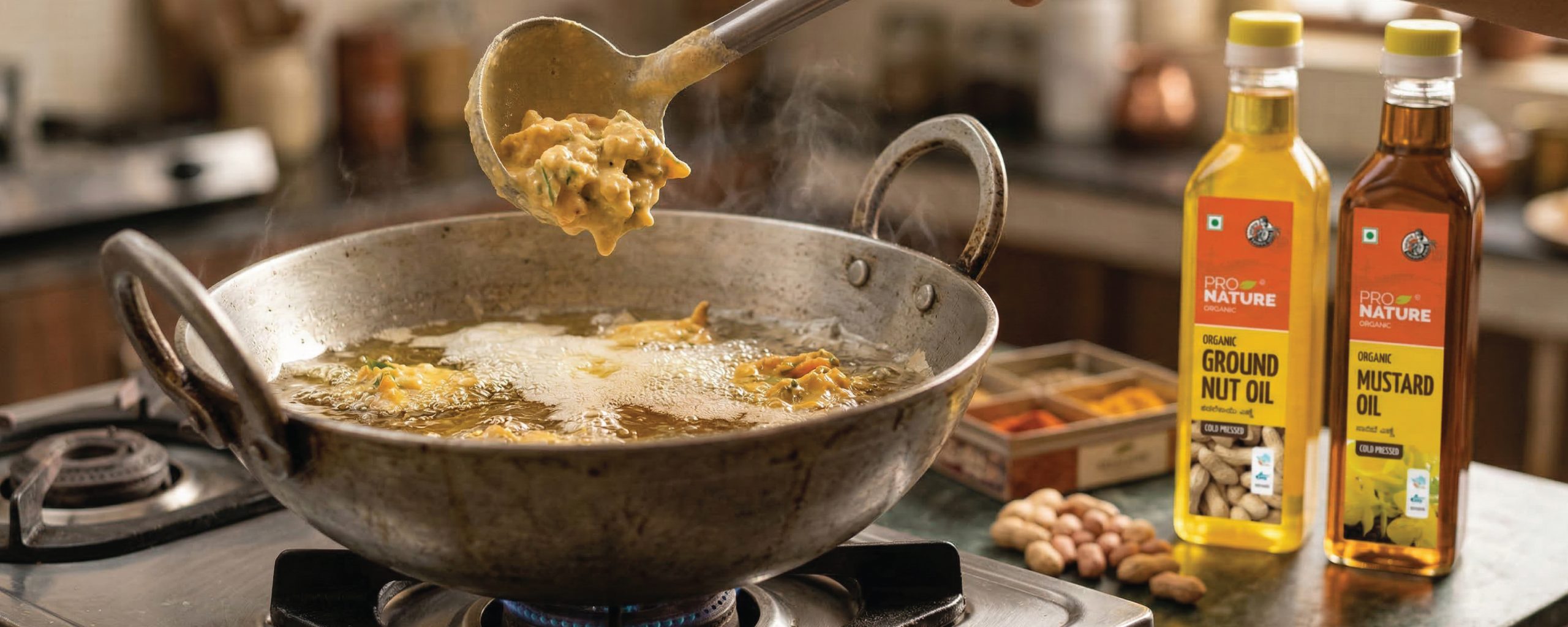
For generations, mustard oil has had a permanent space in Indian kitchens. From frying pakoras to the rich flavours of Punjabi pickles and everyday sabzis, many Indian households trust mustard oil as their everyday cooking companion.
In this article, we’ll explore mustard oil benefits, understand its nutritional profile, and explain why many people today are choosing cold pressed mustard oil over heavily refined alternatives
What Makes Mustard Oil Different?
Other than having a distinctive flavour from its seeds, mustard oil is also nutritionally unique.
Mustard oil contains the following:
- Monounsaturated fatty acids (MUFAs)
- Polyunsaturated fatty acids (PUFAs)
- Omega-3 and Omega-6 fatty acids
- Vitamin E
- Plant antioxidants
Together, these nutrients make mustard oil a nutritious cooking oil for everyday meals.
Of course, moderation still matters. Even healthy oils are calorie-dense, so they work best as part of an overall balanced diet.
Mustard Oil Nutrition: What’s Inside Every Spoon?
Understanding mustard oil nutrition begins with recognising that not all fats are the same.
While mustard oil is almost entirely fat, the quality of those fats makes the difference.
It has a great balance of omega-3 and omega-6 fatty acids. It has lower saturated fatty acids (SFA) in comparison to MUFA and PUFA, and has a good LA: ALA ratio (6:5).
4 Science-Backed Mustard Oil Benefits
Turns out it has earned a place in Indian households for good reasons.
Let’s look at what research actually says.
1. May Support Heart Health
One of the most discussed mustard oil benefits relates to heart health.
Mustard oil has higher amounts of unsaturated fats compared to saturated fats. Replacing saturated fats with unsaturated fats is recommended by several international health organisations as it can improve blood lipid profiles. Poly-unsaturated fatty acids in mustard oil are also good for heart health.
Some observational studies have also suggested that regular use of mustard oil, as part of traditional diets, may be associated with a lower risk of cardiovascular events. However, these studies can’t establish cause and effect, and more high-quality clinical research is needed.
2. Provides Plant-Based Omega-3 Fatty Acids and GSLs
Mustard oil has 6% omega-3 alpha-linolenic acid and 15% omega-6 linoleic acid. Its omega-3 and omega-6 fatty acid ratio makes it a healthy choice. Research highlights that consuming omega-3s can help reduce inflammation.
Mustard seeds naturally contain compounds called glucosinolates, known for supporting overall well-being.
3. Contains Natural Antioxidants
Our bodies naturally produce unstable molecules called free radicals during normal metabolism.
Antioxidants help neutralise these molecules and protect cells from oxidative stress.
Mustard oil naturally contains vitamin E and other plant-derived compounds with antioxidant activity. Vitamin E contributes to protecting cells from oxidative stress, while a balanced diet rich in antioxidant-containing foods supports overall health.
4. Brings Flavour Without Needing Excess Oil
Not every benefit shows up in a nutrition chart.
Because mustard oil has a naturally strong flavour, many people find they don’t need to use as much to achieve a satisfying taste.
Think about a simple aloo sabzi, a spicy fish curry, or a rich paneer tikka marinade. The distinctive flavour of mustard oil adds character to the dish without relying on heavy creams or rich gravies.
Sometimes, healthier eating isn’t just about nutrients; it’s also about enjoying food enough to keep balanced meals interesting.
How to Choose a Quality Mustard Oil
Many mustard oils claim to be “pure” mustard oil. But not all of them are processed the same way.
Here’s what to look for before making a choice:
✓ Choose Cold-Pressed Over Refined
Cold-pressed mustard oil is extracted mechanically at low temperatures, preserving its natural flavour and some naturally occurring nutrients. It also undergoes fewer processing steps than refined oil.
✓ Look for Organic Certification
Organic certification indicates that the mustard seeds are grown without synthetic pesticides or fertilisers, following recognised organic farming standards.
✓ Check the Ingredient List
A good-quality mustard oil should contain one ingredient, which is mustard oil. Avoid products with added flavours, colours or unnecessary additives.
✓ Notice the Aroma and Colour
Fresh cold-pressed mustard oil typically has a deep golden colour and a characteristic pungent aroma. Extremely neutral-smelling mustard oil may have undergone additional refining.
✓ Buy From a Trusted Brand
Transparency matters. Choose brands that clearly mention their extraction process, sourcing practices and quality certifications.
If you’re looking for an organic, minimally processed option, Pro Nature Organic Mustard Oil is cold-pressed from carefully selected mustard seeds to retain its natural flavour and goodness. Available in 500 ml, 1 litre and 3 litre packs, it’s a practical choice for everyday Indian cooking.
Conclusion
Food trends come and go. Mustard oil has quietly stood the test of time.
Generations of Indian families have cooked with it not because it was trending but because it added flavour, versatility and nourishment to everyday meals. Today, nutritional research supports many of those traditional choices, particularly its favourable fatty acid profile and naturally occurring antioxidants.
Like any cooking oil, mustard oil isn’t a magic ingredient. Its benefits come from using it as part of a balanced diet rich in whole grains, fruits, vegetables, pulses and other wholesome foods.
If you’re planning to make mustard oil a part of your kitchen, choosing a cold pressed mustard oil is a simple way to enjoy its authentic taste while opting for minimal processing.
Looking for an organic everyday option? Pro Nature Organic Mustard Oil is carefully cold-pressed to bring the natural richness of mustard seeds to your cooking whether you’re preparing a comforting dal, crisp pakodas or your family’s favourite vegetables fry.
Frequently Asked Questions
Is mustard oil good for everyday cooking?
Yes. Mustard oil can be used for everyday cooking when consumed in moderation as part of a balanced diet. Its favourable composition of monounsaturated and polyunsaturated fats makes it a popular choice in many Indian households.
Is cold-pressed mustard oil better than refined mustard oil?
Cold-pressed mustard oil undergoes minimal processing, which helps preserve its natural aroma, flavour and some naturally occurring nutrients. Refined mustard oil is processed further to improve shelf life and consistency. The better choice depends on your cooking preferences and dietary needs.
What are the main mustard oil benefits?
Research suggests that mustard oil may support heart health when used in place of oils higher in saturated fat. It also provides plant-based omega-3 fatty acids, vitamin E and natural antioxidants, making it a nutritious option for everyday cooking.
Can mustard oil be used for deep frying?
Yes. Mustard oil is commonly used for frying, sautéing and tempering in Indian cuisine. IMustard oil has a relatively high smoke point, making it suitable for frying, sautéing and tempering.
Does mustard oil contain omega-3 fatty acids?
Yes. Mustard oil naturally contains both omega-3 (alpha-linolenic acid) and omega-6 (linoleic acid), making it one of the few commonly used cooking oils that provides both essential fatty acids.
How should mustard oil be stored?
Store mustard oil in a cool, dry place away from direct sunlight. Always keep the bottle tightly sealed to help maintain its freshness, flavour and quality.